An autonomous Slack agent, graded by four eval harnesses
What it took to trust an agent with real work, and where it still fails.
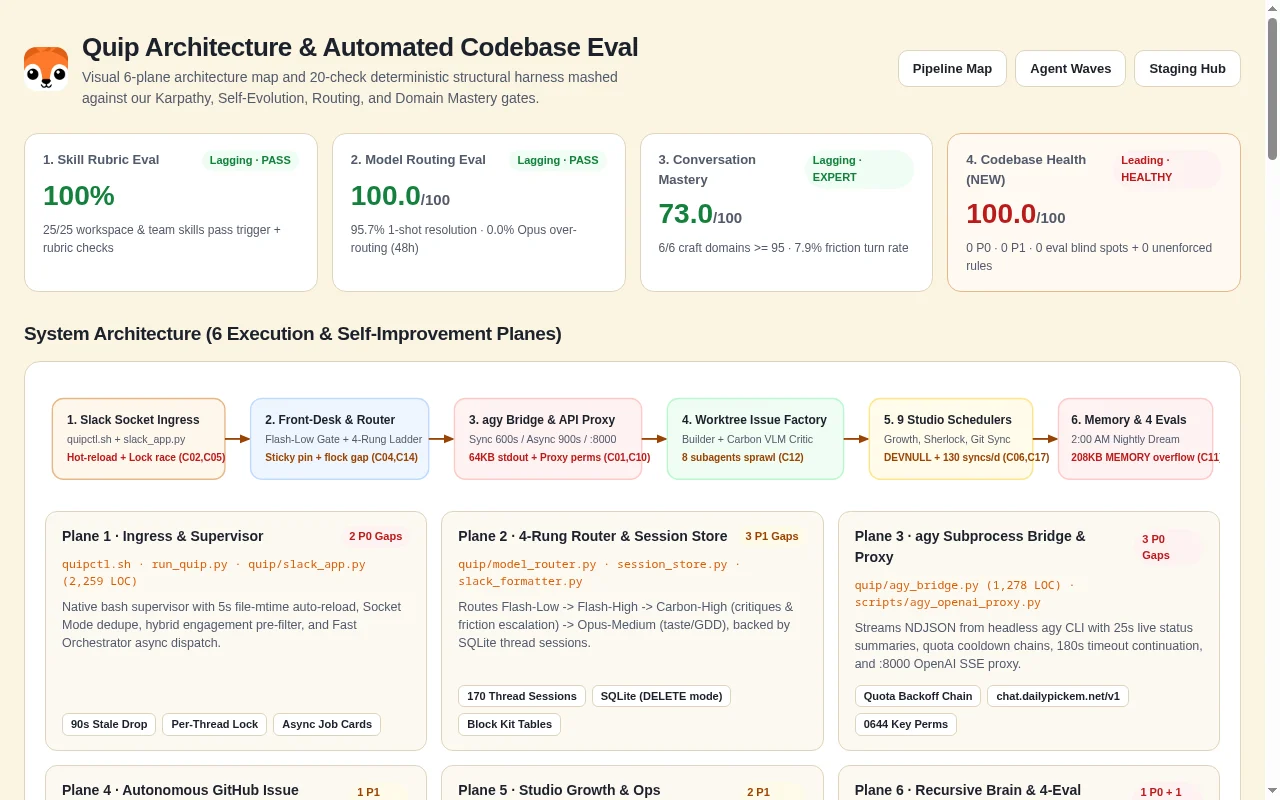
Most “vibe coding” tutorials end at the ten-minute happy path. Then you run an AI workflow in production, and three things break immediately: yesterday’s working flow regresses quietly, per-call model spend threatens gross margin, and platforms without clean APIs block automation cold.
The difference between a weekend demo and a reliable system is never a cleverer prompt. It is the engineering harness wrapped around the model.
Separating planning from execution
We stopped running everything inside one long-running chat session. Instead, planning produces strict five-part issue specifications with explicit out-of-scope boundaries, independent builders work inside isolated git worktrees, and a separate reviewer audits the diff and live browser screenshots.
When an agent fixes a mistake twice, we encode the check into a deterministic script rather than repeating instructions in chat.
Real-device bridges and $0 infrastructure
Where web portals lack public APIs or block datacenter requests, our on-device Phone Agent operates a real Android handset under strict human-approval gates for store submissions and spend.
Meanwhile, our routing ladder keeps simple lookups on fast, low-cost models and reserves heavier reasoning for design, root-cause debugging, and independent review—keeping fixed hosting and telemetry on $0 edge tiers.